

Upgrading insulation is one of the most effective ways to improve your home’s comfort and energy efficiency, but choosing the right material can feel overwhelming. Injection foam and spray foam insulation are both popular options that offer strong performance, though they work in different parts of the home and achieve their results in very different ways. As the area’s one-stop shop for home services, we’re diving into how each type is installed, where it performs best, and the benefits it brings so you can make a more confident decision about your next home insulation upgrade.
What Is Spray Foam Insulation?
Spray foam insulation is applied as a liquid that expands into a dense, durable foam as it cures. Because it grows to fill open cavities, it’s commonly used in attics, basements, rim joists, and other exposed framing areas. Homeowners often choose spray foam for its high R-value (a measure of an insulation’s ability to resist heat flow) and excellent air-sealing capabilities, which can make a noticeable difference in both energy use and indoor comfort.
Spray foam typically comes in two forms: open-cell and closed-cell. Open-cell spray foam is lighter and provides sound-dampening benefits, while closed-cell spray foam is denser, more rigid, and offers additional moisture resistance. Both varieties help reduce drafts, improve HVAC efficiency, and create a more stable indoor environment during extreme temperatures.
What Is Injection Foam Insulation?
Injection foam insulation is designed for enclosed wall cavities. Instead of requiring walls to be opened or drywall removed, technicians drill small access points and inject the material directly into the wall space. As the foam expands, it fills gaps and voids without the disruption of major tear-outs. This makes injection insulation especially appealing for older homes and retrofits where preserving interior finishes is important.
Because injection foam fills the cavity completely, it provides consistent coverage and helps reduce drafts coming through exterior walls. While its R-value may not be as high as closed-cell spray foam, it still delivers strong performance, particularly when the goal is to upgrade insulation in finished walls without a full renovation.
Where Does Each Type Work Best in a Home?
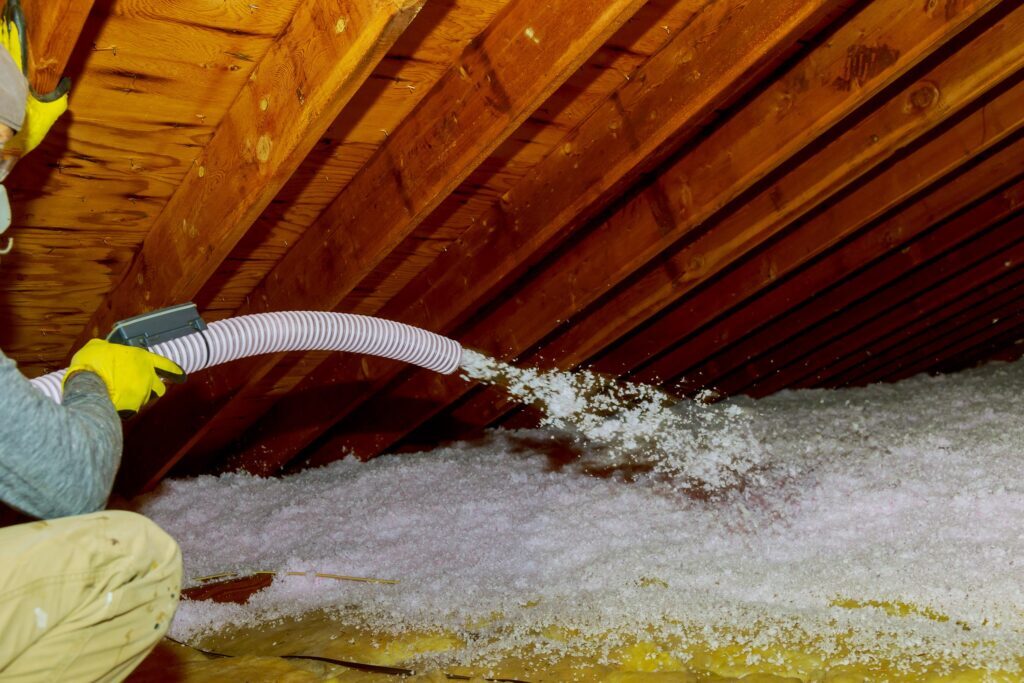
Spray foam excels in open areas where insulation can be applied directly to visible surfaces. Attics are the most common example, but basements, crawl spaces, and garage ceilings can also benefit from its ability to seal cracks and block moisture. The expanding foam adheres tightly to wood, masonry, and other building materials, creating a smooth layer of insulation and air sealing.
Injection foam is more specialized. It’s ideal for upgrading older homes where walls have minimal or deteriorated insulation. Instead of replacing drywall, technicians can access cavities from the interior or exterior and fill them completely with foam. That makes it a strong choice for homeowners who want better comfort and lower utility bills without a major remodeling project.
Comparing Performance, Cost & Benefits
Both types improve efficiency, but they’re suited for different parts of the home and deliver different levels of air sealing. Homeowners often weigh performance, cost, and installation impact when deciding which option is best. If you’re trying to decide which one is best for your situation, consider these factors:
- Installation method: Spray foam is applied in exposed cavities, while injection foam fills closed walls through small drilled openings.
- Air sealing capability: Spray foam (especially closed-cell) creates a tighter air seal due to its density and rigidity.
- Moisture resistance: Closed-cell spray foam provides strong moisture control, while injection foam adds some resistance but varies by product type.
- Energy-saving potential: Both options boost efficiency, though spray foam generally offers higher long-term energy savings due to its higher R-value.
- Sound reduction: Injection foam performs well in reducing noise transfer through walls, while open-cell spray foam can also provide noticeable sound dampening.
- Cost differences: Spray foam often carries a higher upfront price because of labor and material density, while injection foam may be more budget-friendly for projects focused on existing walls.
- Impact on existing walls: Injection foam requires minimal disruption, while spray foam may require new drywall or finishing if used on interior living spaces.
- Best use cases: Spray foam works best in attics, basements, and open areas, while injection foam is ideal for retrofitting older homes with outdated wall insulation.
Choosing the Right Insulation for Your Home
The age of your home, your budget, and your energy goals all play a role in determining which type makes the most sense. Homeowners with unfinished spaces or moisture concerns often lean toward spray foam. Meanwhile, those living in older homes with drafty exterior walls usually see the biggest improvement from injection insulation.
Upgrades also depend on how long you plan to stay in your home. Spray foam’s higher R-value can offer long-term savings that offset the initial cost over time. Injection foam offers more modest energy improvements, but it gives homeowners a way to upgrade wall insulation quickly and without remodeling.
Choose Isaac Heating & Air Conditioning for Insulation Services
Both injection and spray foam insulation can make a significant difference in indoor comfort and overall energy use. The right choice ultimately comes down to how your home is built and what you want from the upgrade. Isaac Heating & Air Conditioning helps homeowners across Avon, Canandaigua, Syracuse, and Twin Tiers find the insulation solution that fits their space, their goals, and their long-term comfort.
Contact Isaac Heating & Air Conditioning today to request an estimate for insulation in Avon, Canandaigua, Syracuse, or Twin Tiers, NY.